We redesigned BİM Online's interface without writing a single line of code. This piece is about how you can bring a product up to date without "rewriting" it.
Not code debt, but decision debt
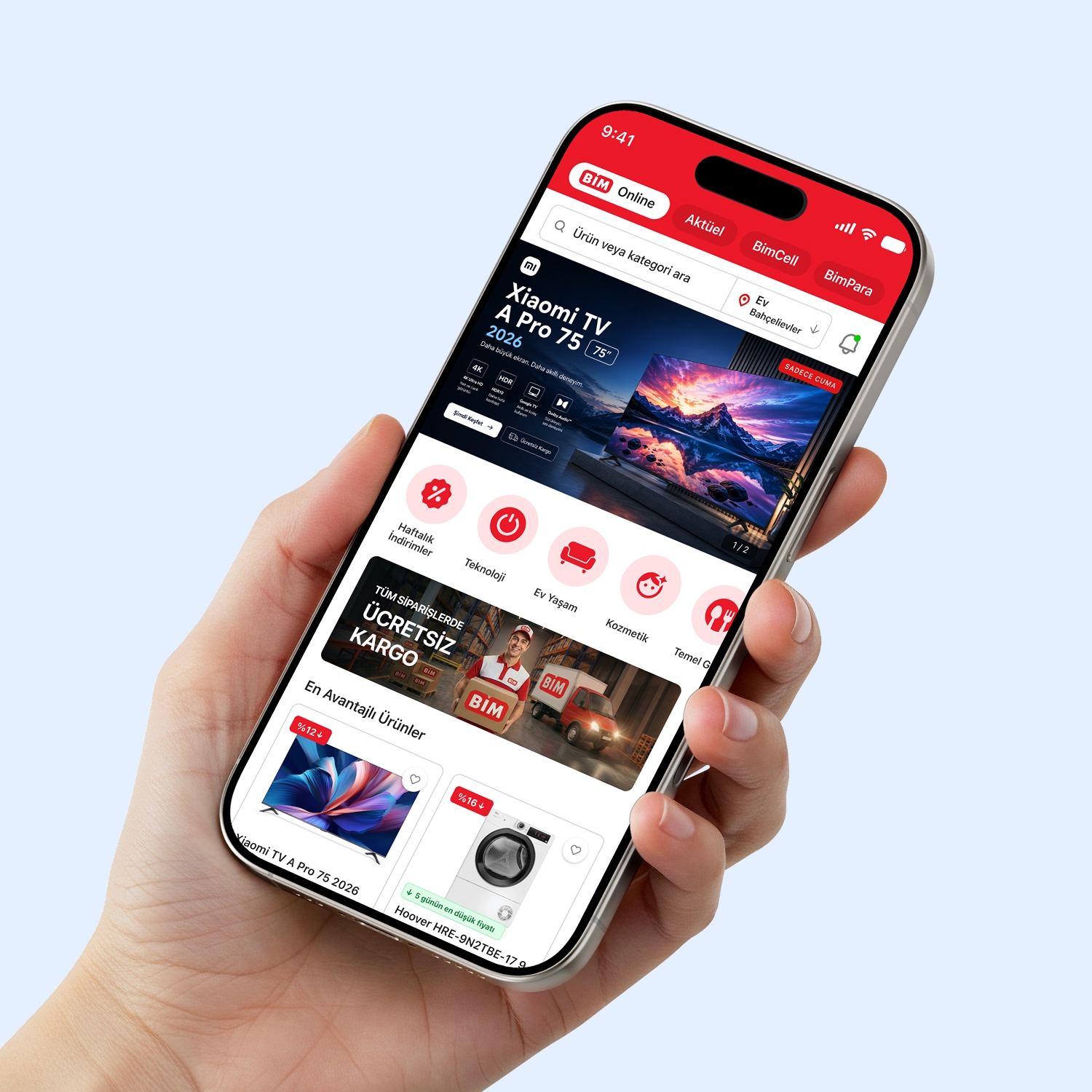
When most teams look at an aging app, their first reflex is "let's rebuild it from scratch." But at BİM Online, the real problem wasn't technical. As the product matured, every campaign and every new feature had been solved on its own screen, in its own language, until it all added up to a crowded home screen and an inconsistent filtering flow. We call this decision debt, not code debt, and decision debt is paid off with a redesign, not a rewrite.
That distinction also set the scope: the engineering team kept the existing infrastructure in place, while we worked only on the user interface (UI) and user experience (UX).
Decision debt is paid off with a redesign, not a rewrite.
Where we drew the line
We split the eight-week engagement into three flows: product discovery (search, filters, categories), checkout (saved cards, installments, secure payment) and system states (empty cart, connection errors, maintenance mode). That last one is usually overlooked, yet users remember an app most vividly when "something goes wrong." An error screen full of generic icons can undo everything the brand has said up to that point.
What changed across three screens
- Filters moved below the search bar. Category and filter tags are now gathered on a single surface, so users don't leave the page when moving from search to filtering.
- Checkout became a single page. Address, card details and installment comparison came together in one secure checkout flow instead of separate screens.
- Empty and error states now speak the brand's own language. States such as connection errors, maintenance mode and an empty cart were redrawn in BİM's own visual tone instead of default system icons.
Why it still works
The fact that this work never touched the code isn't a limitation; it's a choice. When a product's infrastructure is already solid and the whole problem sits in the interface, answering it with a design system rather than a "rewrite" project is faster, cheaper and less risky. That's exactly what we did at BİM Online.